
Head to head · SD Strength Index
Turkey vs Iran Military Power 2026 Compared
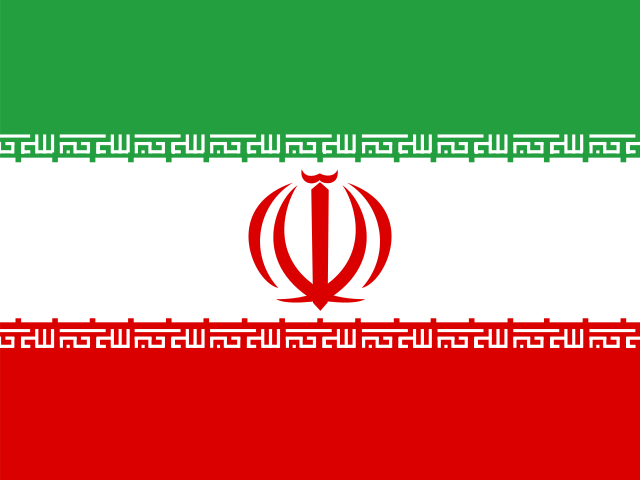
on 5 of 7 areas
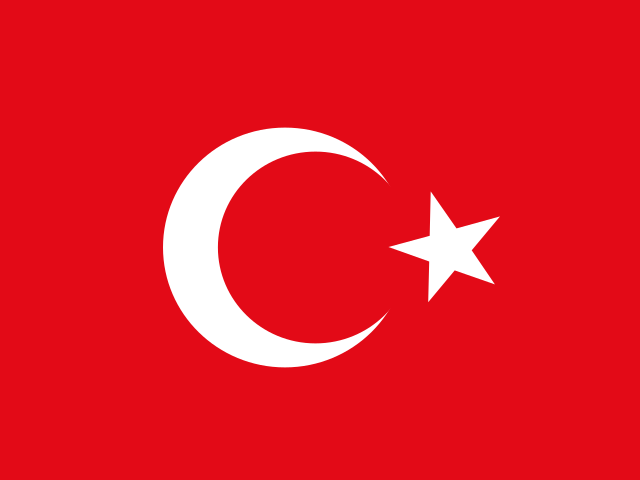
| 15 | Air powercounts for 24% | 27 | ||
| 50 | Missiles & strikecounts for 15% | 8 | ||
| 17 | Air & missile defencecounts for 14% | 20 | ||
| 18 | Sea powercounts for 13% | 32 | ||
| 41 | Land forcescounts for 10% | 59 | ||
| 62 | Manpowercounts for 6% | 54 | ||
| 13 | Budget & industrycounts for 18% | 19 |
Key figures
| Iran | Turkey | |
|---|---|---|
| Defence budget ($bn) | 7.4–25 | 17–30 |
| Active personnel | 520k–610k | 355k–401k |
| Reserves | 350k | 378.7k |
| Combat aircraft | 100–250 | 290 |
| Fifth-generation fighters | 0 | 0 |
| Attack helicopters | 10–50 | 75 |
| Main battle tanks | 1,300–1,900 | 2,200–2,500 |
| Aircraft carriers | 0 | 0 |
| Submarines | 10–21 | 12–13 |
| Naval fleet | 80–260 | 190 |
| Ballistic missiles | 1,000–2,500 | — |
| Missile range (km) | 2,000 | 280–800 |
| Long-range air-defence batteries | 2–8 | 0–6 |
| Nuclear warheads | 0 | 0 |
Branch by branch
| Air power Advantage: Turkey | Iran. An estimated 60 to 150 legacy F-14, F-4, MiG-29 and Su-24 jets survive. Su-35 deliveries from Russia are rumoured but unconfirmed. | Turkey. About 238 F-16s, four E-7T airborne early warning jets and ten A400M transports, plus armed TB2, TB3 and Akinci drones. |
| Missiles Advantage: Iran | Iran. An estimated 1,000 to 2,500 ballistic missiles and 120 to 330 launchers after the 2026 war, with ranges up to 2,000 km. Production has reportedly restarted underground at lower volume. | Turkey. Tayfun short range ballistic missiles in early service, range undisclosed. Turkey has no medium range ballistic missile in service. |
| Air and missile defence Advantage: Turkey | Iran. Integrated air defences assessed 85 to 90 per cent degraded in March 2026, with perhaps two to eight long range batteries left. | Turkey. Four S-400 batteries owned but switched off and Siper only entering service, so NATO units fill the gap. Unlike Iran's, the network was never struck. |
| Naval Advantage: Turkey | Iran. The frigate Dena and a Kilo submarine were sunk in March 2026. An estimated 100 to 300 fast attack craft and 11 to 20 Ghadir midget submarines remain. | Turkey. About 13 submarines, 16 to 19 frigates and the assault ship TCG Anadolu, with new Istif frigates launched in 2026. |
| Land forces Advantage: Turkey | Iran. An estimated 1,600 tanks, around 600 of them T-72S and Karrar types, and about 1,400 rocket launchers. | Turkey. An estimated 2,200 to 2,500 tanks, about 1,000 self propelled guns and 8,000 armoured vehicles. |
| Manpower Advantage: Iran | Iran. An estimated 520,000 to 610,000 active troops split between the regular army and the Revolutionary Guard, plus about 90,000 active Basij. | Turkey. About 355,000 active troops and 380,000 reservists. |
If it came to war
| Scenario | Short war | Long war |
|---|---|---|
| A clash on the shared border | Turkey Turkish F-16s, drones and armour would dominate a fight on the frontier, where Iran's air force can do little. | Turkey Iran can answer with ballistic missiles, but a US naval blockade in place since mid-April 2026 limits how fast it can rebuild. |
| A missile exchange | Iran Iran's missiles outrange anything Turkey can fire back, and Turkey's own long range air defence is still arriving. Iran holds the opening. | Turkey Iran's launchers and missile plants were heavily struck in 2026, and its propellant supply depends on Chinese shipments. Turkey's factories are untouched. |
Is Turkey stronger than Iran militarily?
Yes. Turkey has the better air force, a navy that is still afloat and a defence industry that sold a record $10.05bn abroad in 2025. Its defence ministry budget for 2026 is about $19bn. Iran's official 2025 budget was $7.4bn, though Silent Dossier estimates spending outside the budget on the Revolutionary Guard and allied groups adds $15bn to $25bn.
Iran leads on people and missiles. It has an estimated 520,000 to 610,000 active troops against Turkey's 355,000, and a ballistic missile arsenal Turkey has no answer to. Iran fired about 1,200 ballistic missiles at Gulf states and 400 to 650 at Israel in March 2026 alone. Turkey has nothing on that scale.
How did the 2026 war change the balance?
It gutted Iran's conventional forces. US and Israeli strikes from 28 February left Iranian air defences an assessed 85 to 90 per cent degraded by March. The frigate Dena and a Kilo submarine went down in the first week of that month. A ceasefire began on 8 April and has been extended indefinitely, and a US naval blockade has run since mid-April.
The missile force came through best. Tunnel entrances bombed shut were dug open again within weeks, and production has reportedly resumed underground at lower volume. Estimates of how many launchers survived range from about one in five to two in three.
Who has the better air force, Iran or Turkey?
Turkey, easily. Its F-16s are ageing and its Typhoons and KAAN fighters are years away, but Iran is far worse off: F-14s and F-4s bought before 1979, some MiG-29s and Su-24s, and no airborne early warning aircraft. Turkey's TB2, TB3 and Akinci drones strike and come home. Iran's Shaheds do not come back.
Reports that Russia finished a first batch of Su-35s for Iran in mid-2026 remain unconfirmed. Even 16 to 20 of them would leave Turkey ahead in the air.
Latest Silent Dossier analysis
Questions readers ask
Who would win in a war, Turkey or Iran?
Turkey. Its air force, navy and army are stronger, and Iran's air defences have not recovered from 2026. Iranian ballistic missiles could do real damage early, but Iran cannot defend its own airspace.
Does Iran have more missiles than Turkey?
Yes, by far. Silent Dossier estimates Iran still holds 1,000 to 2,500 ballistic missiles with ranges up to 2,000 km. Turkey's Tayfun is a short range missile whose range has not been disclosed.
How many soldiers does Turkey have?
About 355,000 active personnel, 380,000 reservists and 157,000 paramilitary personnel. Iran has an estimated 520,000 to 610,000 active troops.
Does Turkey have S-400s?
Yes, four batteries delivered by Russia in 2019, but they are inactive. Moscow confirmed talks on their fate in July 2026, and the US ties any Turkish return to the F-35 to their removal.