
Head to head · SD Strength Index
China vs Russia Military Power 2026 Compared
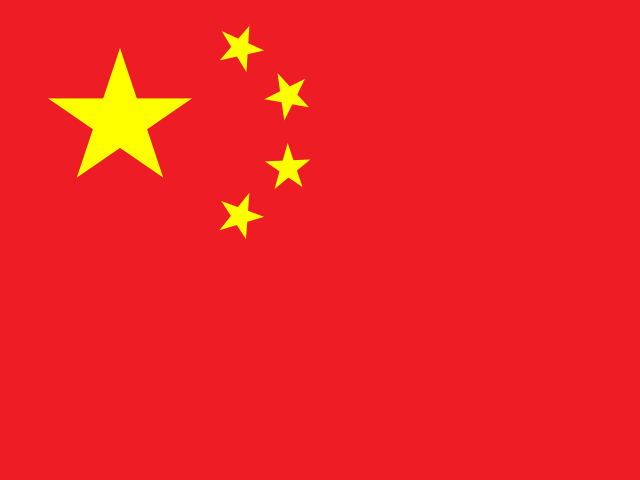
on 7 of 7 areas

| 71 | Air powercounts for 24% | 46 | ||
| 100 | Missiles & strikecounts for 15% | 46 | ||
| 95 | Air & missile defencecounts for 14% | 78 | ||
| 76 | Sea powercounts for 13% | 64 | ||
| 93 | Land forcescounts for 10% | 69 | ||
| 100 | Manpowercounts for 6% | 92 | ||
| 55 | Budget & industrycounts for 18% | 47 |
Key figures
| China | Russia | |
|---|---|---|
| Defence budget ($bn) | 277–377 | 145–200 |
| Active personnel | 2m–2m | 1.1m–1.5m |
| Reserves | 510k | 1.5m–2m |
| Combat aircraft | 1,900–2,300 | 1,000–1,300 |
| Fifth-generation fighters | 250–400 | 16–35 |
| Attack helicopters | 250–350 | 320–420 |
| Main battle tanks | 4,800–6,900 | 2,000–3,500 |
| Aircraft carriers | 3 | 0–1 |
| Submarines | 58–66 | 56–64 |
| Naval fleet | 370–395 | 300–600 |
| Ballistic missiles | 3,100 | 300–350 |
| Missile range (km) | 11k–15k | 18k |
| Long-range air-defence batteries | 110–150 | 90–150 |
| Nuclear warheads | 600–640 | 5,400–5,600 |
Branch by branch
| Budget Advantage: China | China. An announced $277bn for 2026, up 7 per cent. Silent Dossier estimates real spending could reach $377bn. | Russia. Classified. Silent Dossier estimates $145bn to $200bn for 2026, and the 2027 draft budget lifts national defence to 17.1tn roubles. |
| Air power Advantage: China | China. About 1,838 fourth and fifth generation fighters, including 308 J-20s, backed by about 50 early warning aircraft. | Russia. An estimated 700 to 900 fighters, only 16 to 35 of them Su-57s, and an estimated 4 to 9 early warning aircraft. |
| Surface fleet Advantage: China | China. More than 370 ships and submarines, with three carriers, about 10 Type 055 and 35 Type 052D destroyers and four Type 075 assault ships. | Russia. An estimated 10 destroyers and 14 frigates. The carrier Admiral Kuznetsov is out of service, and Ukraine claims about 30 per cent of the Black Sea Fleet has been lost or damaged. |
| Submarines Advantage: Russia | China. About 62 boats, but only an estimated 12 to 16 nuclear powered, including six Type 094 missile submarines. | Russia. About 60 boats, an estimated 28 to 33 of them nuclear powered, including eight Borei class missile submarines and five or six Yasen cruise missile boats. |
| Land forces Advantage: China | China. An estimated 4,800 to 6,900 tanks, among them some 500 to 650 Type 99s and about 2,200 Type 96s. The top figure counts stored Type 59s. | Russia. An estimated 2,000 to 3,500 tanks with units. Storage has fallen from 7,342 tanks in 2021 to about 2,088, and only about 851 of those look restorable. |
| Manpower Advantage: China | China. About 2 million active troops and 510,000 reservists, plus an estimated 500,000 People's Armed Police. | Russia. An estimated 1.1 million to 1.5 million active troops, short of a decreed strength of 1.5 million. |
| Conventional missiles Advantage: China | China. An estimated 3,100 ballistic missiles at the end of 2024, including about 900 short range, 1,300 medium range and 500 DF-26 intermediate range missiles. | Russia. An estimated 140 to 200 Iskander-M launchers, plus Kalibr, Kh-101, Kinzhal and Zircon missiles and the Oreshnik, first fired in November 2024. |
| Nuclear arsenal Advantage: Russia | China. An estimated 620 warheads in early 2026, about 34 of them deployed, with more than 1,000 projected by 2030. | Russia. About 5,500 warheads in total and about 4,300 in the military stockpile, carried by an estimated 300 to 330 ICBMs as well as submarines and bombers. |
If it came to war
| Scenario | Short war | Long war |
|---|---|---|
| A conventional war on the land border | China China can mass troops and modern fighters close to its own bases, while much of Russia's army is committed in Ukraine. | China Chinese yards and aircraft plants replace losses faster than Russian ones. Russia's fallback would be its nuclear arsenal. |
| A nuclear standoff | Russia Russia has about 4,300 warheads in its military stockpile against China's estimated 620, spread across Yars ICBMs, Borei submarines and Tu-160 bombers. | Russia China is loading new silos and adding warheads. Even at the more than 1,000 warheads projected for 2030, it would still be far behind Russia. |
China vs Russia military strength: who is ahead?
China, on almost every conventional measure. It has about 2 million active troops to Russia's estimated 1.1 million to 1.5 million, more than 370 ships and submarines, and three carriers against one Russian carrier that is out of service. China's announced 2026 military budget of $277bn is above Silent Dossier's estimate of $145bn to $200bn for Russia, and real Chinese spending could reach $377bn.
Russia leads on nuclear weapons, with about 4,300 warheads in its military stockpile to an estimated 620 for China. It also has the combat experience China lacks. Russian forces have fought in Ukraine since February 2022, while China has not fought a war since 1979. China's high command is in upheaval. In October 2026 the Communist Party confirmed the expulsion of the former Central Military Commission vice-chairman Zhang Youxia and the former Joint Staff chief Liu Zhenli, and their seats remain empty.
What has the war in Ukraine cost Russia's military power?
Armour, above all. Visually confirmed Russian tank losses since 2022 exceed 4,000. The Soviet stocks that once covered those losses fell from 7,342 tanks before the war to about 2,088 by June 2026, and only about 851 of those look worth restoring. Silent Dossier estimates 2,000 to 3,500 tanks remain with Russian units.
The air force and navy have lost aircraft and ships as well. Ukrainian drones destroyed an estimated 10 to 13 strategic bombers at their bases on 1 June 2025, and Ukraine says an Su-57 burned on its stand at Akhtubinsk on 29 October 2026. Ukraine also claims about 30 per cent of the Black Sea Fleet has been lost or damaged, a figure Silent Dossier cannot verify. The war has made Russia a mass producer of drones, with Geran attack drones built in the thousands every month at Alabuga.
How do the Chinese and Russian air forces compare?
China's is larger and newer. China had about 1,838 fourth and fifth generation fighters in August 2026, including 308 J-20s and 8 J-35s, and Silent Dossier's own estimate for the J-20 runs from 300 to 500. Russia has an estimated 700 to 900 fighters. Only 16 to 35 of them are Su-57s, and new ones arrive in small batches, the latest in February and September 2026.
The gap in support aircraft is wider. China flies about 50 KJ-500, KJ-2000 and KJ-600 early warning aircraft and some 25 tankers, against an estimated 4 to 9 early warning aircraft and 15 tankers in Russian service. Bomber numbers are closer, with an estimated 200 to 270 Chinese H-6s against 100 to 125 Russian Tu-95MS, Tu-160 and Tu-22M3 aircraft.
Which navy is stronger, China's or Russia's?
China's, on the surface. It has about 10 Type 055 and 35 Type 052D destroyers, four Type 075 assault ships and the carrier Fujian, commissioned in November 2025 with electromagnetic catapults. Russia has an estimated 10 destroyers and 14 frigates, four of them of the Admiral Gorshkov class.
Under the sea Russia keeps the lead. Of its roughly 60 submarines, an estimated 28 to 33 are nuclear powered, including eight Borei class missile boats and five or six Yasen cruise missile boats. China has about 62 submarines, but an estimated 12 to 16 of them are nuclear. Its yards have launched nine Type 093B attack submarines since 2022, and not all of them are yet in service.
How do the Chinese and Russian nuclear arsenals compare?
Russia's is far larger. It has about 5,500 warheads in total, around 4,300 of them in the military stockpile, and an estimated 300 to 330 ICBMs, among them the Yars, the Avangard and a small number of Sarmats. Russia first fired the Oreshnik intermediate range missile in November 2024 and says an Oreshnik unit went on combat duty in Belarus in December 2025.
China's arsenal is smaller but growing. Silent Dossier estimates about 620 warheads in early 2026, some 20 more than a year earlier, with only about 34 deployed. More than 100 new silos are probably loaded with DF-31 class missiles, and projections put China above 1,000 warheads by 2030.
Recent updates
Latest Silent Dossier analysis
Questions readers ask
Who wins a China vs Russia military comparison?
China, on conventional forces. It has more troops, ships, modern fighters and money, and much of Russia's army is committed in Ukraine. Russia leads on nuclear weapons and combat experience.
Is China's military budget bigger than Russia's?
Yes. China announced $277bn for 2026, and Silent Dossier estimates its real spending could reach $377bn. Russia's spending is classified. Silent Dossier puts it at $145bn to $200bn, a much larger share of a far smaller economy.
How many tanks do China and Russia have?
China has an estimated 4,800 to 6,900. Russia has an estimated 2,000 to 3,500 with units and about 2,088 in storage, of which only about 851 look restorable.
Does Russia have more nuclear warheads than China?
Yes. Russia has about 5,500 warheads in total and about 4,300 in its military stockpile. China has an estimated 620 and is projected to pass 1,000 by 2030.
Are China and Russia military allies?
They are partners, bound by a strategic partnership. China took about 13 per cent of Russia's arms exports between 2021 and 2025 and operates two Russian S-400 regiments and an estimated 10 to 12 Kilo class submarines.