
Head to head · SD Strength Index
North Korea vs South Korea Military Power 2026 Compared
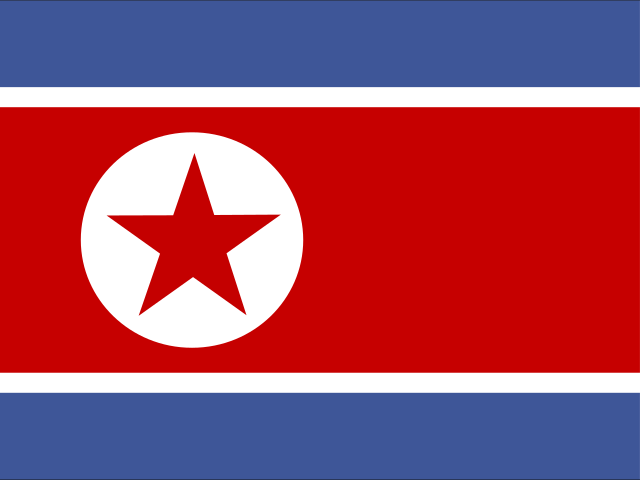
on 5 of 7 areas
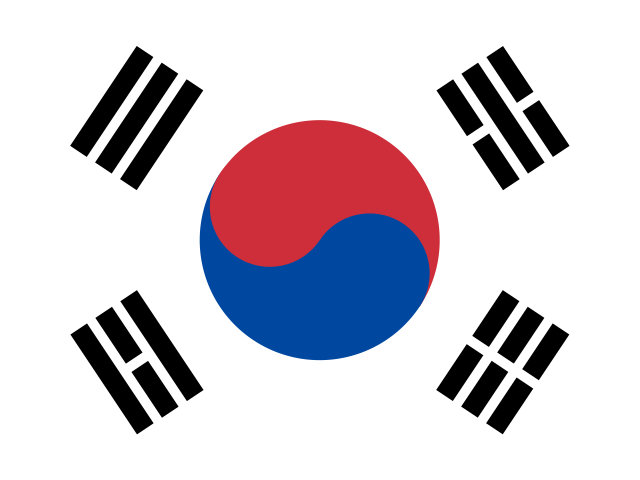
| 20 | Air powercounts for 24% | 33 | ||
| 42 | Missiles & strikecounts for 15% | 15 | ||
| 16 | Air & missile defencecounts for 14% | 37 | ||
| 28 | Sea powercounts for 13% | 44 | ||
| 55 | Land forcescounts for 10% | 62 | ||
| 85 | Manpowercounts for 6% | 83 | ||
| 12 | Budget & industrycounts for 18% | 27 |
Key figures
| North Korea | South Korea | |
|---|---|---|
| Defence budget ($bn) | 4–10 | 44–47 |
| Active personnel | 1.2m–1.3m | 450k |
| Reserves | 600k–7.6m | 3.1m |
| Combat aircraft | 400–550 | 380–420 |
| Fifth-generation fighters | 0 | 39 |
| Attack helicopters | 16–24 | 110–170 |
| Main battle tanks | 3,500–4,300 | 2,000–2,300 |
| Aircraft carriers | 0 | 0 |
| Submarines | 64–72 | 21 |
| Naval fleet | 700–800 | 150–170 |
| Ballistic missiles | 200–300 | — |
| Missile range (km) | 13k–15k | 800–3,000 |
| Long-range air-defence batteries | 2–10 | 6–8 |
| Nuclear warheads | 50–120 | 0 |
Branch by branch
| Manpower Advantage: North Korea | North Korea. An estimated 1.28 million active troops, at least 600,000 reservists and a militia of some 5.7 million. About 11,000 soldiers gained combat experience in Russia's Kursk region. | South Korea. 450,000 active personnel, down from 563,000 in 2019 as the conscript pool shrinks, and about 3.1 million reservists. Around 28,500 US troops are based alongside them. |
| Air power Advantage: South Korea | North Korea. An estimated 480 combat aircraft, almost all Soviet era designs and short of fuel. No fifth generation fighters, and the Russian MiG-29 and Su-27 transfer is unconfirmed. | South Korea. About 390 fighters, including 39 F-35As, 59 F-15Ks and the first production KF-21, delivered in September 2026. |
| Land forces Advantage: South Korea | North Korea. An estimated 3,500 to 4,300 mostly old tanks and 5,000 to 5,500 rocket launchers. Mass and firepower, much of it obsolete. | South Korea. About 2,100 tanks, 250 to 300 of them K2s, and some 1,200 K9 howitzers of the kind Seoul now sells to Poland, Spain and Romania. Fewer weapons, far better ones. |
| Naval power Advantage: South Korea | North Korea. Two new Choe Hyon class destroyers, the second reportedly commissioned in September 2026, about 70 small diesel submarines and hundreds of patrol craft. | South Korea. About 13 destroyers including Aegis ships, 16 frigates and 21 submarines, three of which can fire ballistic missiles. |
| Missiles and nuclear Advantage: North Korea | North Korea. An estimated 50 to 120 warheads and solid fuel Hwasong ICBMs with an estimated reach of 13,000 to 15,000 km, enough for the continental United States. | South Korea. No nuclear weapons. The Hyunmoo-5 conventional bunker buster, with an estimated range of up to 3,000 km, reached frontline units in January 2026. |
| Budget and industry Advantage: South Korea | North Korea. An economy of about $35bn, with an estimated 15 to 25 per cent of it going to the military. | South Korea. A $44.7bn defence budget and an arms industry that exported $15.4bn of tanks, howitzers, jets and missiles in 2025. |
If it came to war
| Scenario | Short war | Long war |
|---|---|---|
| A surprise artillery and missile strike on Seoul | North Korea North Korean rocket artillery and short range missiles could do heavy damage to the capital region in the first hours. | South Korea South Korean and US air power and counterbattery fire would destroy the launchers within days and take control of the skies. |
| A full conventional war on the peninsula | South Korea The North's mass would slow an allied advance, but its obsolete air force could not protect its army. | South Korea Fuel shortages and old equipment would break the North's forces. The danger is that Pyongyang reaches for nuclear weapons when it is losing. |
Who would win a war between North and South Korea?
In a conventional fight, South Korea. Its air force would dominate from the first day: 39 F-35As and 59 F-15Ks against a North Korean fleet of Soviet era jets that is short of fuel. At sea, the South's Aegis destroyers and modern submarines outclass almost everything Pyongyang owns, even after two Choe Hyon class destroyers joined the North's fleet in 2026.
The North's answer is mass and fear. Silent Dossier estimates it has 5,000 to 5,500 rocket launchers and 50 to 120 nuclear warheads, so any war risks becoming a nuclear one. Seoul cannot close that gap on its own.
Does North Korea have more tanks than South Korea?
Yes, nearly twice as many: an estimated 3,500 to 4,300 against roughly 2,100. Most of the North's fleet is old, while the South's K2 Black Panther is good enough that Poland has ordered 360 of them. The new Chonma-20, paraded in October 2025 and first drilled in March 2026, is meant to narrow the gap. It has a long way to go.
Which Korea spends more on its military?
South Korea, by a distance. Its 2026 defence budget of about $44.7bn is larger than the whole North Korean economy, estimated at around $35bn. Pyongyang publishes no real total. Silent Dossier estimates it spends $4bn to $10bn.
The money gap shows up everywhere. Seoul is buying 20 more F-35As, fielding the KF-21 and Hyunmoo-5, and selling K2 tanks to Poland and K9 howitzers to Spain. The North puts its scarce cash into missiles, warheads and new destroyers, and lets the rest of its forces age.
Has the Russia alliance made North Korea stronger?
In parts. About 11,000 North Korean troops fought in Russia's Kursk region, and around 6,000 of them were killed or wounded by early 2026. The survivors have combat experience no South Korean unit has. Russian air defence equipment, including at least one Pantsir, has reportedly arrived in return. None of that fixes an air force and an armoured fleet that are decades behind.
Latest Silent Dossier analysis
Questions readers ask
Who is stronger, North or South Korea?
South Korea is stronger conventionally, with far more modern aircraft, ships, tanks and artillery. North Korea has more troops and nuclear weapons, which the South does not.
Does North Korea have a bigger army than South Korea?
Yes. North Korea has an estimated 1.28 million active troops against South Korea's 450,000, though the South's soldiers are far better equipped.
Does South Korea have nuclear weapons?
No. South Korea relies on the US nuclear umbrella, while North Korea is estimated to hold 50 to 120 warheads.
Can North Korea destroy Seoul?
It could do severe damage with rocket artillery and missiles in the opening hours of a war. South Korean and American forces would be expected to destroy most of those launchers within days.